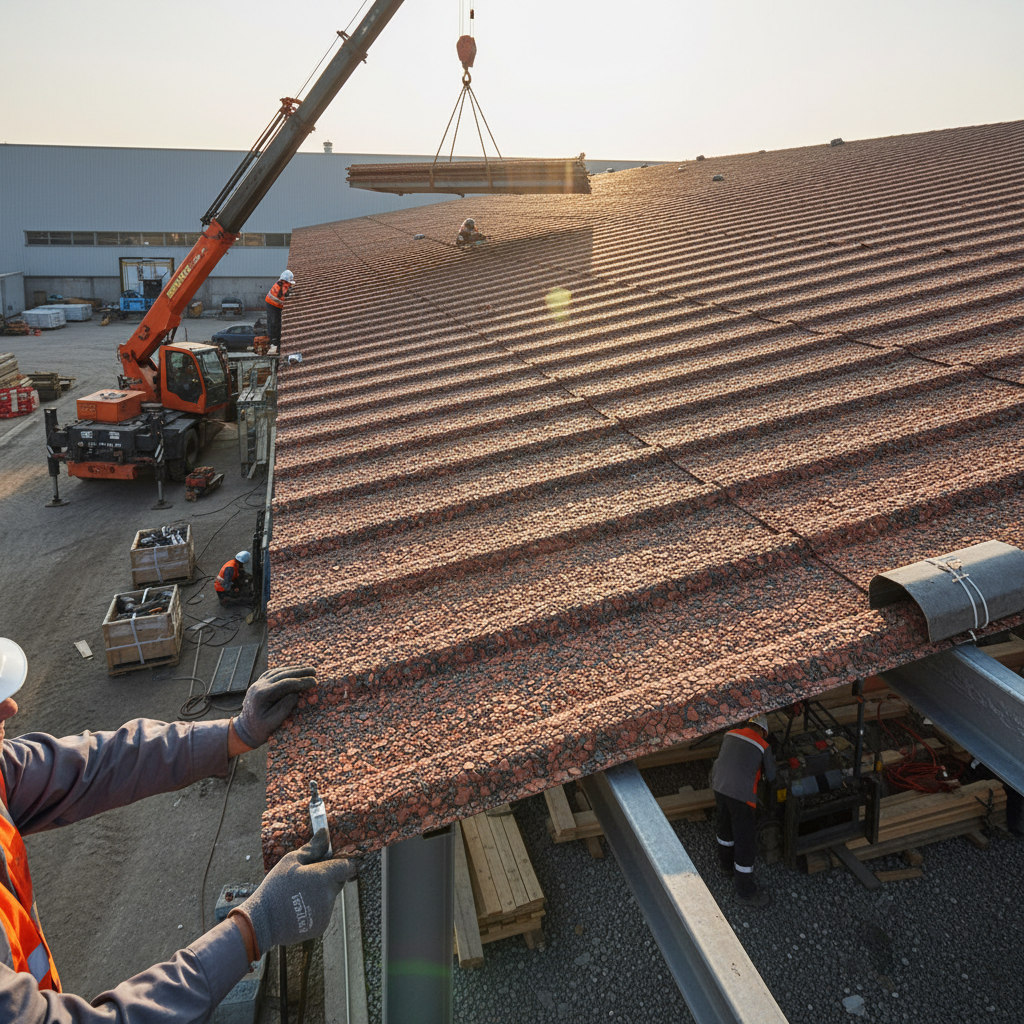
When planning a roofing project, homeowners and contractors often start their research by analyzing the average cost of asphalt shingles. This metric serves as a baseline for budgeting, but it is important to realize that the initial price per square is only one part of the overall financial equation. Understanding the variables that influence these costs allows for a more strategic approach to material selection and long-term property maintenance.
Beyond the immediate financial outlay, the global shift toward energy-efficient building materials is redefining how we view the average cost of asphalt shingles. As urban heat islands become a critical environmental concern, the industry is moving toward high-reflectivity solutions that reduce the thermal load on buildings. This evolution means that the value of a roof is no longer measured solely by its purchase price, but by its ability to lower operational energy costs.
For those looking to optimize their investment, integrating advanced materials can significantly alter the long-term average cost of asphalt shingles by extending the lifespan of the roof and reducing cooling expenses. By focusing on high-performance granules and reflective coatings, building owners can achieve a superior balance between upfront expenditure and sustainable, life-cycle savings.
Global Market Dynamics of Asphalt Shingle Pricing
The global market for roofing materials is subject to significant volatility due to the fluctuating costs of raw petroleum-based bitumen and fiberglass. When calculating the average cost of asphalt shingles, stakeholders must account for supply chain disruptions and regional labor variations that can shift the total price by 20% to 30% between different geographical zones.
Furthermore, international standards such as ISO certifications for building materials are pushing manufacturers to improve the durability of their products. This push toward higher quality often increases the initial material cost but decreases the frequency of replacement, fundamentally changing the economic profile of residential and commercial roofing.
Defining the Value Metrics in Roofing Materials
In simple terms, the average cost of asphalt shingles refers to the combined price of the material, the underlayment, and the professional labor required for installation. However, professional developers look beyond the surface price to evaluate the "value per year of service," which considers the product's resistance to UV degradation and weathering.
Modern industry needs have shifted toward "cool roof" technologies. This is where the simple cost of a shingle is compared against the energy-saving potential of high solar reflectivity. By using specialized granules, the thermal absorption of the roof is reduced, which directly offsets the initial cost through lower monthly electricity bills for air conditioning.
Ultimately, the definition of cost has expanded to include environmental externalities. As governments implement stricter energy codes, the choice of high-reflectivity materials becomes a necessity rather than a luxury, making the integrated cost of high-performance shingles more attractive than the lowest available budget option.
Core Factors Influencing Installation Costs
One of the primary drivers affecting the average cost of asphalt shingles is the quality of the protective granules. Superior granules provide high UV opacity and weathering resistance, which prevents the underlying bitumen from cracking prematurely under intense sunlight.
Another critical factor is the solar reflectivity of the surface. Products like HIREFLE granules are designed to keep building surfaces cooler, which means that while the average cost of asphalt shingles might be slightly higher for premium materials, the reduction in building energy consumption provides a rapid return on investment.
Lastly, the precise size distribution and low dust content of the granules ensure a more uniform application. This precision reduces material waste during manufacturing and installation, helping to stabilize the average cost of asphalt shingles for large-scale industrial projects.
Efficiency Ratings and Long-Term Financial Impact
To understand the true financial impact, we must analyze the relationship between material performance and long-term savings. High Solar Reflectivity (SR) and High UV Opacity are not just technical specifications; they are financial hedges against rising energy costs. A roof that reflects more sunlight requires less artificial cooling.
When we compare the average cost of asphalt shingles across different granule grades, we see a clear correlation between initial investment and life-cycle expenditure. Low-grade materials may be cheaper upfront but lead to higher energy bills and shorter replacement cycles.
Comparison of Material Performance vs. Life-Cycle Cost
Global Applications of Reflective Roofing
In regions with extreme heat, such as the Middle East and Southeast Asia, the application of high-reflectivity granules is essential. In these climates, the average cost of asphalt shingles is viewed through the lens of thermal management, where the ability to reflect solar radiation prevents the roof from becoming a heat sink.
Industrial zones and large-scale warehouses also benefit significantly from these materials. By implementing cool roof technologies, these facilities can reduce their reliance on massive HVAC systems, thereby lowering the total cost of ownership and improving the working environment for employees.
Sustainability and Social Impact of Cool Roofs
The adoption of high-performance granules contributes to a larger social goal: the mitigation of the Urban Heat Island (UHI) effect. When cities replace dark roofs with reflective surfaces, the ambient temperature of the city drops, improving public health and reducing heat-related mortality.
From a sustainability perspective, the use of low-density, low-consumption granules reduces the overall carbon footprint of the manufacturing process. This ensures that the average cost of asphalt shingles is not just a financial metric, but a reflection of a more responsible approach to resource management.
Moreover, superior staining and weathering resistance ensure that roofs remain aesthetically pleasing and functional for longer periods. This reliability provides peace of mind and dignity to homeowners, knowing their primary shelter is protected by innovative, sustainable technology.
Future Innovations in Ceramic Granule Technology
The future of roofing lies in the integration of "smart materials" that can adapt to changing weather conditions. We are seeing a trend toward ceramic granules with even higher solar reflectivity and precise size distribution control, which allows for thinner but more effective protective layers.
Automation in the production of these granules is further driving down the average cost of asphalt shingles by reducing human error and material waste. Digital transformation in the supply chain ensures that high-reflectivity materials can be delivered to remote industrial zones more efficiently.
As green energy policies become more stringent, we expect to see ceramic granules integrated with photovoltaic elements. This will transform the roof from a passive protective layer into an active energy-generating asset, completely redefining the concept of roofing costs.
Comparative Analysis of Granule Technology and Cost Efficiency
| Material Grade |
Solar Reflectivity |
Durability Score |
Impact on Average Cost |
| Standard Sand |
Low |
4/10 |
Baseline Low |
| Basic Ceramic |
Medium |
6/10 |
Moderate Increase |
| HIREFLE Reflective |
High |
10/10 |
High Value / Low Life-cycle |
| UV-Shielded Mix |
Medium-High |
8/10 |
Moderate Increase |
| Weather-Guard Ceramic |
Medium |
9/10 |
Balanced Cost |
| Ultra-Cool Hybrid |
Ultra-High |
9/10 |
Premium Investment |
FAQS
The type of granules directly impacts both the initial material cost and the long-term maintenance expense. Premium granules, such as HIREFLE, increase the upfront price slightly but significantly lower the average cost of ownership by increasing the roof's lifespan and reducing energy consumption through higher solar reflectivity.
Yes. High-reflectivity ceramic granules reflect a larger portion of the solar spectrum away from the building. This prevents heat from penetrating the attic and living spaces, which reduces the load on air conditioning systems and lowers electricity costs, effectively offsetting the initial investment in higher-grade shingles.
Standard granules provide basic protection and color. HIREFLE granules are engineered for high solar reflectivity, high UV opacity, and superior weathering resistance. They also feature precise size distribution and extremely low dust, leading to a more durable and energy-efficient roof surface.
While most beneficial in hot, sunny regions to combat heat, cool roof materials provide UV protection and weathering resistance that are valuable in all climates. They protect the roof's structural integrity from solar degradation regardless of the average temperature.
On the contrary, low density in high-performance granules often indicates a more efficient material that provides the same or better protective coverage with less weight. This leads to lower consumption during manufacturing and reduces the overall dead load on the building structure.
To calculate ROI, subtract the baseline average cost of asphalt shingles from the cost of premium shingles, then divide that difference by the estimated annual energy savings and the extended lifespan of the roof. Usually, the ROI is realized within a few years through reduced utility bills.
Conclusion
Analyzing the average cost of asphalt shingles requires a shift in perspective from short-term expenditure to long-term value. By integrating high-performance materials like HIREFLE granules, building owners can achieve superior solar reflectivity, enhanced UV opacity, and exceptional weathering resistance. These technical advantages translate directly into reduced energy consumption and a significantly extended roof lifespan, proving that the most cost-effective roof is the one that performs the best over time.
Looking forward, the roofing industry will continue to move toward sustainable, energy-positive solutions. Investing in high-reflectivity ceramic granules today not only protects individual properties but also contributes to a cooler, more sustainable urban environment. We encourage developers and homeowners to prioritize material quality over the lowest bid to secure lasting value and environmental responsibility. Visit our website: www.coolroofmaterials.com